On May 5, 1946, Italians played the first paper slip listing 12 football matches, at 30 lire a play, and one of them, Emilio Biasotti, called all 12 results. The idea belonged to Massimo Della Pergola, a sports journalist who had worked out the 1, X and 2 scheme in 1943 and, once the war ended, founded Sisal with two partners to run it. CONI, the Italian Olympic committee, backed the launch.
The slip turned 80 this spring, and Sky Sport marked the anniversary with a long history of the contest. Italian football has since picked up a whole family of games built on its matches, from console titles that carry a club’s crest to licensed apps that take bets beside the fixtures. Each of them runs on somebody’s permission, and who grants it, on what terms, says more about this new era than any change of screen.
For a club in Rome, those terms have decided where its name appears in video games and what its shirt says this season.
Italy nationalized the football pools in 1948
The private contest didn’t last long. In April 1948 a decree signed by President Enrico De Nicola reserved prediction pools played for money to the state, and gave CONI the right to run those tied to the sports it oversaw. The contest took the name Totocalcio, and the first official slip of the new arrangement followed later that year. The game built on Italy’s football results had become a public product, and from then on its rules came from Rome.
The format kept changing. A 13th match joined the slip on January 21, 1951, which is where the Italian phrase fare tredici comes from, and the 13-match column survived until 2003, when a 14th was added. The record pool, in 1993, reached 34,470,967,370 lire, but 1,472 players hit 13 that week, and each of them took home just under 12 million lire.
The contest still runs, though it has changed shape. Over the years the slip took in fixtures from foreign leagues and European cups, and since 2022 the top prize has gone to 13 correct results, picked from eight compulsory matches and seven to twelve optional ones, after Totogol and two spin-off contests were scrapped.
Roma spent four EA editions as Roma FC
Clubs hold a license of their own, and it travels with the crest. In the summer of 2020, Roma announced a long-term, exclusive partnership with Konami that tied its name, crest and official kits to the eFootball PES series alone. PES 2021 launched a few weeks later as the only console football game with the real club in it, and Konami’s artists and designers rebuilt the Stadio Olimpico inside the game.
EA had to improvise. FIFA 21 carried the side as Roma FC, with an invented badge and a generic stadium, and the stand-in stayed through FIFA 22, FIFA 23 and EA SPORTS FC 24.
The way back opened on July 24, 2024, when the club and Electronic Arts announced an exclusive, multi-year partnership. It brought the men’s and women’s teams into EA SPORTS FC for the first time, starting with FC 25 and reaching the mobile and online versions as well, and it made AS Roma Femminile one of the two Italian women’s sides licensed in the series.
Exclusivity is the point of these deals and also their cost. Supporters who played EA’s game spent four years with an imitation, while those on Konami’s had the real club. The club, not the publisher, decided which group that would be, and it decided again when it switched back.
Roma fielded pro gamers three years before eSerie A began
The club’s first professional gamers arrived before either deal. In 2017, Roma partnered with Fnatic, the esports organization, to form its first competitive gaming team, with Aman Seddiqi, Sam Carmody and Nicolò Mirra playing FIFA in the club’s colors. Fnatic ran the division, from training to event logistics, and the trio was to meet major European sides at tournaments.
The league built its own competition three years later. In early 2020, Lega Serie A set up eSerie A, billed as Italy’s first official national esports championship, with competitions on FIFA 20 and eFootball PES 2020. From then on, a club’s gamers could compete in a league run by the same body that organizes its league fixtures.
When the crest went to Konami, the club followed it into Konami’s game. For the 2020-21 season it launched an official PES team and signed its first three professional players for it, among them Emiliano Spinelli, who was born in Germany and grew up in Rome, and who had finished as European runner-up in 2019. Two of the three were also due to play in the PES half of eSerie A.
Consoles and esports turned a Roma match into entertainment a supporter could play rather than just watch, under permissions football controls itself. The next license in this story belongs to the state, and it covers products played for money.
Italy charged 7 million euros for each new gaming concession
Italy put casino games online in July 2011, when cash poker and casino tables went live under the State Monopolies about half an hour behind schedule, delayed by a configuration problem. Since then one national regime has licensed both betting and casino games played over the internet, under concessions issued in Rome by the agency now known as ADM.
That regime was rebuilt last year under Legislative Decree 41/2024. The old concessions lapsed at midnight on November 12, 2025, and 52 new ones took effect the following day, held by 46 operators. Each cost €7 million, paid in two installments, and runs for nine years. Each concession is now tied to a single website, and new accounts require SPID, the national digital identity, or an electronic identity card.
In 2023, most of the money still moved offline. CNBC reported that Italy produced about €21 billion in gross gaming revenue that year, with roughly 21% of it coming from online play. The companies collecting it have consolidated as well: Flutter Entertainment bought Sisal in 2022 and completed its purchase of Snaitech in 2025, at an enterprise value of €2.3 billion.
So the company Della Pergola co-founded to run a 30-lira football slip now belongs to a group whose shares trade on Wall Street, and that is where this story crosses the ocean.
The US has no national casino concession
FanDuel, the American brand Flutter owns, runs casino apps under a license model with no Italian equivalent. Every state that permits real-money casino play over the internet passes its own law and puts its own agency in charge. New Jersey’s market opened in 2013 under the state’s Division of Gaming Enforcement, Pennsylvania’s six years later under the Pennsylvania Gaming Control Board, and Michigan’s in 2021 under the Michigan Gaming Control Board.
Follow the Sisal line across the Atlantic, then, and it reaches a market that has grown one statehouse vote at a time. Seven American states now run live, regulated markets for that kind of play, each with its own tax rate and its own roster of approved operators. A state table in GamingToday’s online casino guide records each of those markets with the year it launched, which shows how the American map has filled in since 2013.
Entry works state by state too: the apps turn away anyone under 21 and check that each player is inside the licensing state’s borders before play begins. Most legislatures haven’t voted yes, so across most of the country no licensed casino app operates at all.
Eight years on, Rome still argues over its betting ad ban
One rule in this story is still under live attack, and it governs what football may say rather than who may sell. Article 9 of the 2018 Dignity Decree (Decree-Law 87, which Law 96 converted that summer) outlaws every form of promotion, indirect promotion included, for any game that pays out cash prizes, and its reach extended to sponsorship in 2019. Its short list of exemptions names national lotteries drawn at a later date, local prize events and ADM’s safe-gaming logos. The football pools aren’t on it.
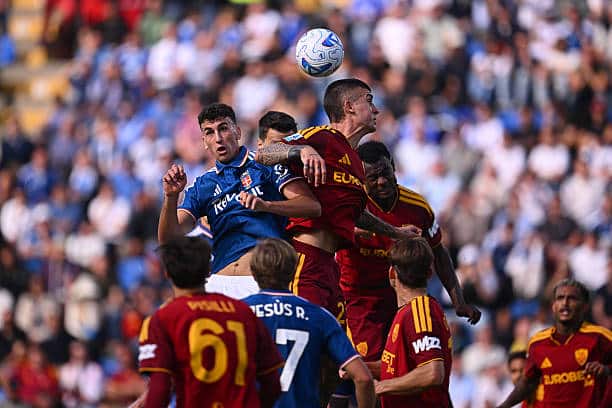
The ban hasn’t kept betting-linked names off Roma’s shirt. Since March, the first team has worn Eurobet.live, which the club describes as a livescore platform for football fans, under a deal that runs for this season and two more. Calcio e Finanza, citing Il Tempo, put the deal at €13 million to €14 million a season and explained that the shirt carries the site’s logo because the betting operator’s own brand can’t appear there under the decree.
Italian football’s federation wants the ban gone. In a report on the state of the Italian game, published on April 8 after Italy failed to qualify for the World Cup, the FIGC’s then-outgoing president, Gabriele Gravina, asked for the advertising and sponsorship ban to be abolished. He called it largely ineffective, citing a 2022 parliamentary inquiry that found gambling had grown in spite of it, and asked for a levy on football betting to fund youth development and infrastructure.
A Senate committee heard both sides in late September, NSS Sports reported. Ezio Simonelli, president of Lega Serie A, asked for the ban to be lifted, and the next day Umberto Calcagno, who heads the players’ association AIC, told the same committee nobody watching would sense that a ban existed at all. The change that did reach the statute book went another way: Law 166, published on September 25, made sponsorship spending by companies tied to betting information and odds-comparison services non-deductible, and it left the ban untouched.
On the evidence published so far, the federation’s case rests more on money than on proof. A rise in gambling after 2018 shows the ban didn’t stop growth; it doesn’t show that lifting the ban would do no harm. The decree’s defenders face the problem Calcagno described. A ban that viewers can’t detect is a hard thing to defend as protection. For a Roma supporter, the choice is concrete. The Eurobet.live logo is either a compromise worth keeping or a gap worth closing, and each reader can settle that before Parliament does.