
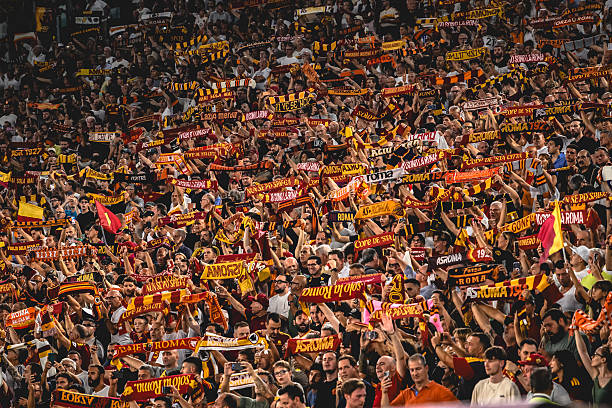
Football fandom used to have fairly obvious entry points. You grew up watching your local club, followed the team your family supported or discovered a player on television and started following their career.
Gaming has added another route. For a new generation, a club like Roma can first appear on a screen through a football game, before a player ever watches a Serie A match.
A new way into football
The scale of gaming makes it easy to see why it can have an influence on other forms of entertainment. The global video game market was valued at $322.6 billion in 2025, covering an enormous audience across consoles, computers and mobile devices.
Football already has an enormous international audience, but gaming gives clubs another way to reach people who might not have an existing connection to the sport.
For a younger fan, discovering Roma doesn’t necessarily mean growing up in Rome or having a family member who supports the club. They might first encounter the team while choosing a squad in a football game. That initial choice can lead somewhere else.
When a virtual club becomes a real one
Football games put fans in the middle of the action. Instead of just watching a team, players can select Roma, build a squad, experiment with tactics and take the club into matches themselves. That can create familiarity surprisingly quickly.
A player might first come across Rodrigo Mora while building a Roma lineup, learning his strengths through repeated matches. That familiarity can make it more likely that the player takes notice when Mora appears in a real Serie A fixture.
From there, a curious player might:
- Look up Roma’s real-world fixtures
- Start watching Serie A matches
- Follow players and transfer news
- Join football communities online
- Develop an interest in the club’s history
The path from gaming to fandom isn’t necessarily deliberate. Sometimes it’s a matter of becoming curious about the team behind the digital version.
Football already has a huge digital audience
That potential becomes more important when the global reach of football is considered.
The UEFA Champions League has a global audience of around 1.9 billion, while the English Premier League draws a cumulative 1.5 billion live viewers over a single season.
Those numbers underline the size of the audience available to football clubs. Gaming adds another layer to that reach, especially among people who spend much of their entertainment time online.
Roma doesn’t need every gamer to become a supporter. Even a small percentage of players who encounter the club through gaming and then take an interest in Serie A shows a new route to fandom.
Gaming is bigger than football games
The relationship between gaming and football also goes beyond traditional soccer titles.
Digital audiences can now move between all kinds of experiences, from esports and fantasy sports to streaming, prediction products and online casino platforms.
They are different forms of entertainment, but they share a common feature: they are increasingly easy to discover and access online.
That’s where platforms and information services have a role to play. As more gaming experiences become available digitally, people can research unfamiliar options before deciding whether they are right for them. Resources such as Casino Guru’s overview can make that process easier by bringing information about online casino platforms together in one place.
That doesn’t mean football fans will automatically become casino players. Rather, it reflects how the broader gaming landscape has expanded beyond a single type of game or audience.
Roma has plenty to offer new fans
Once someone develops an interest in Roma, there is plenty to keep them engaged.
The club has a long history, a distinctive identity and a passionate following. Its players can become part of that connection too. Someone who first encountered Manu Koné through a football game might become curious about his real-world performances and start following Roma’s matches more closely.
The same is true of Serie A more broadly. A game can introduce a player to clubs and players they might otherwise never have come across before. Watching those teams compete in actual matches then gives that knowledge a real-world context.
Gaming can therefore act as the introduction, while football itself provides the reason to stay.
The next generation of football fans
Football clubs have spent years finding ways to reach international audiences, and gaming gives them another opportunity to do so.
A future Roma supporter might not have discovered the club through a parent, a local pub or a trip to Rome. They might have picked the team from a menu on a screen, enjoyed playing with its players and eventually wondered how the real thing compares.
That’s a very different route into fandom. But it can lead to the same place.
Gaming isn’t replacing traditional football culture. It’s simply giving a new generation another way to find it.


